
Texture
Visual. Tactile. Intrinsic.

Speaking of working in a series, I think I could write a whole series about the different kinds of texture. With any form of art, you can have visual texture and with others you can also have tactile texture, as in the surface itself has a texture. However, it is my humble opinion, only textiles have intrinsic texture.
So, what is visual texture, you ask? It is the illusion that there is texture. The image itself makes you think there is texture. This is often done through patterning or making an object look 3D. Van Gogh was a master at visual texture. The brush strokes in his paintings give his paintings a visual tactile quality. The paint is also quite thick but more on that later. Many paintings look smooth because you can’t see the brush strokes. Van Gogh instead used those brush strokes to advantage.
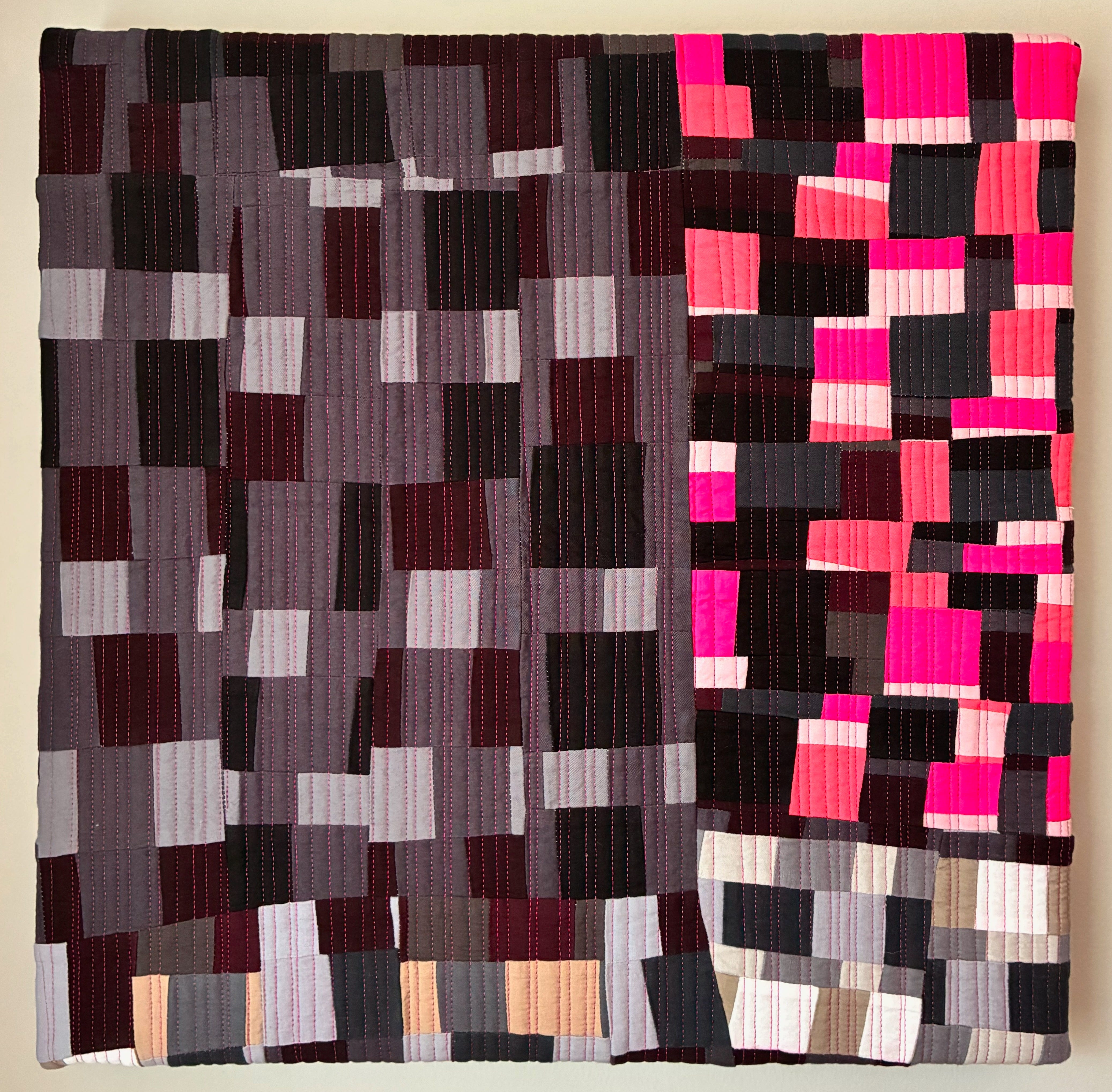
I like to create visual texture in my work with patterning, shading, and the use of prints. For example, in the piece below, the repeat patterning creates visual texture. It makes the piece look like it has additional layers. Maybe some of those shapes are behind the others. It’s something you could imagine has a texture to it.
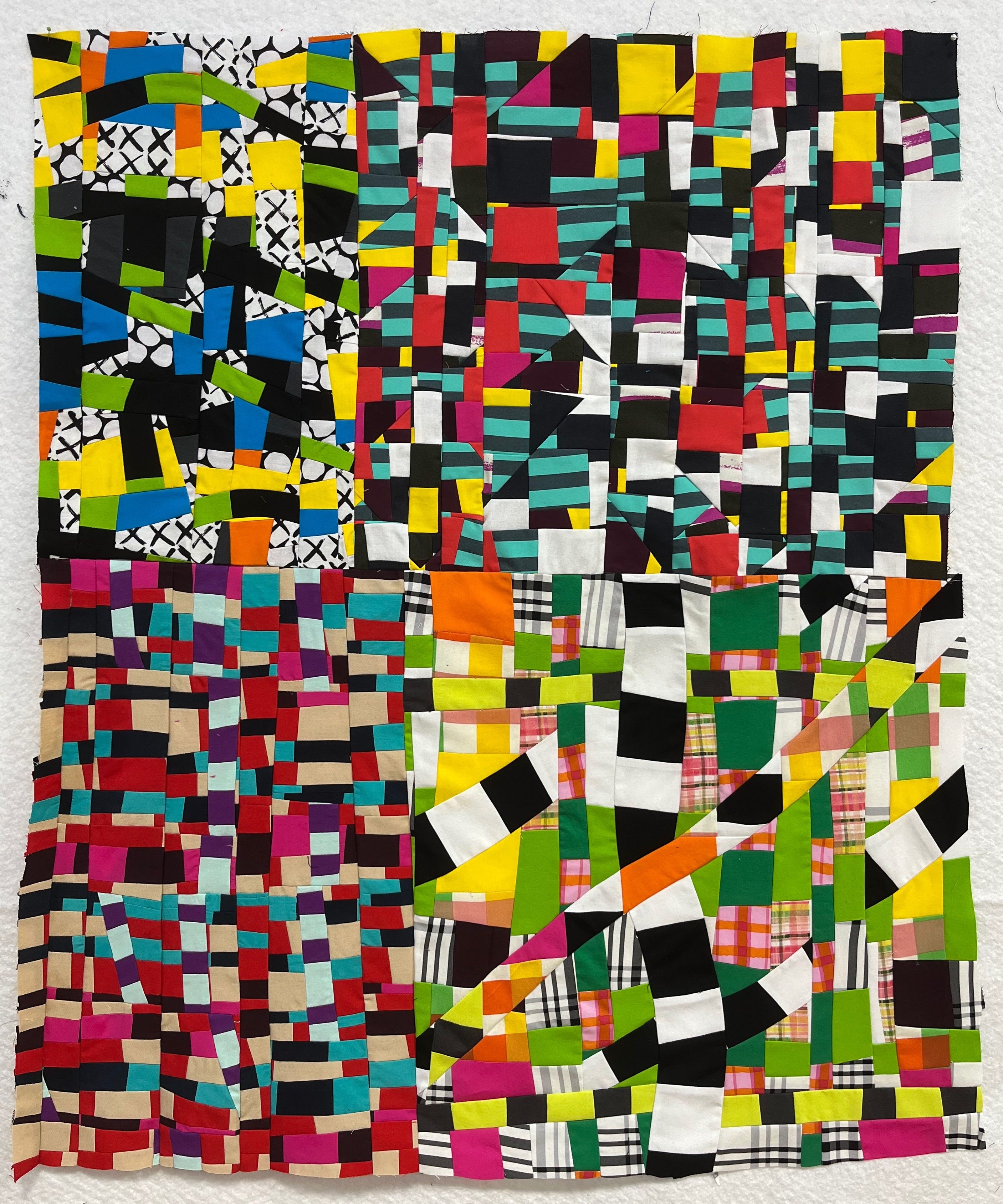
In this next one, the different sizes of the patterning create different textures and makes some of the areas appear to recede and others to come forward.
The next type of visual texture I’ve been using more recently is shading. Using different values of a color in the shape gives it depth and creates the illusion it is 3D. You can really see the difference between the collage version on the left and the quilt top on the right for Calcium Carbonate Structures 1.


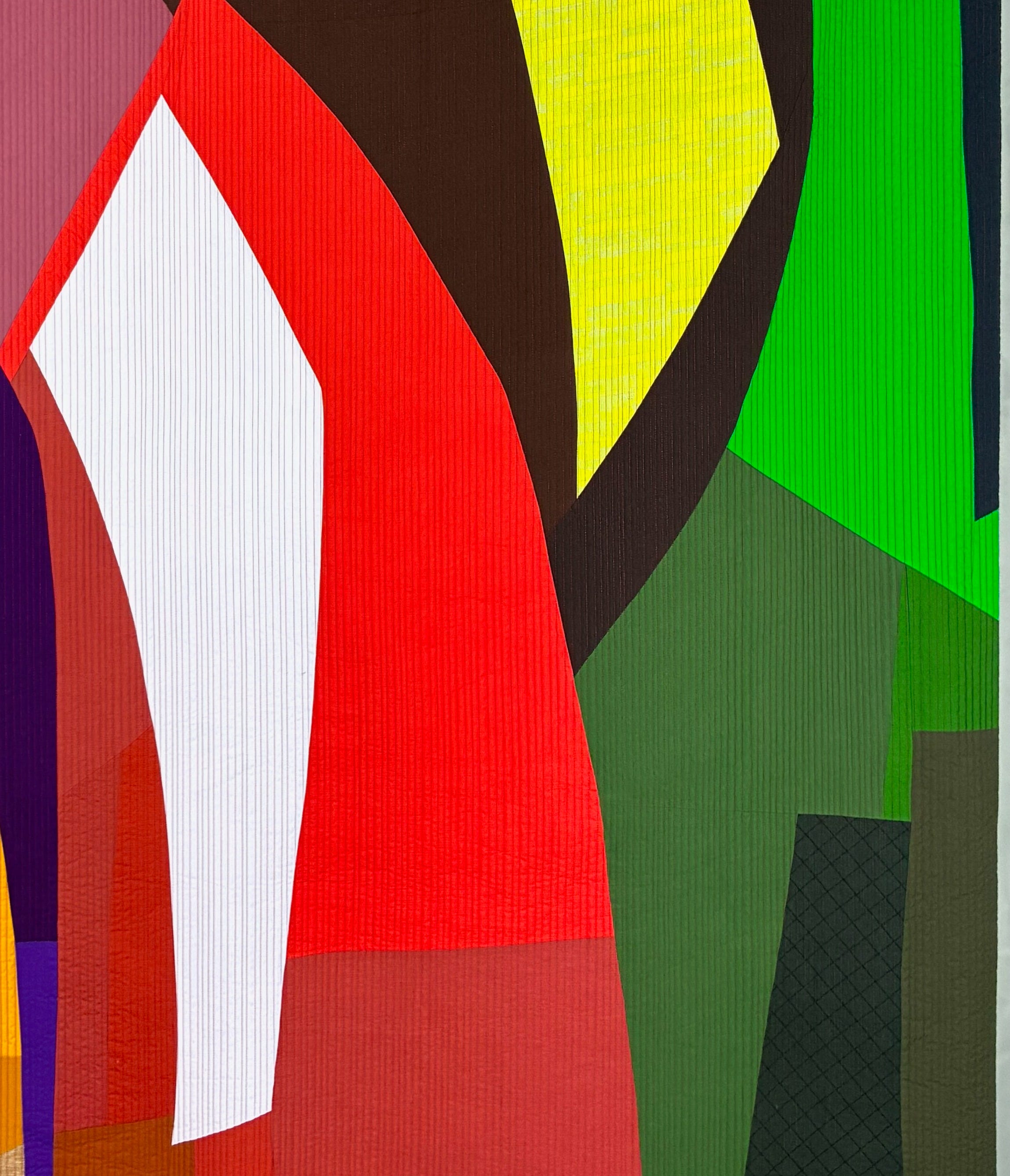
I’ve also started incorporating commercially printed fabric into my work in place of pieced patterning. In Calcium Carbonate Structures 2, I used prints in a couple of places, shown in the closeup shot below.
Visual texture is such a cool element in visual art! I love exploring new ways to incorporate it into my work. I’m planning to start learning surface design to make my own prints.
Up next: tactile texture.
Tactile texture in visual arts can easily be seen in sculpture, collage, painting, and textiles. Sculpture feels obvious – it’s a 3D object. The layering of paper/fabric/found items in collage creates depth and texture and use of thick brush strokes creates texture in painting. Textiles are a whole other level of texture. A woven textile has bumps and ridges created by the warp and weft sitting over each other.
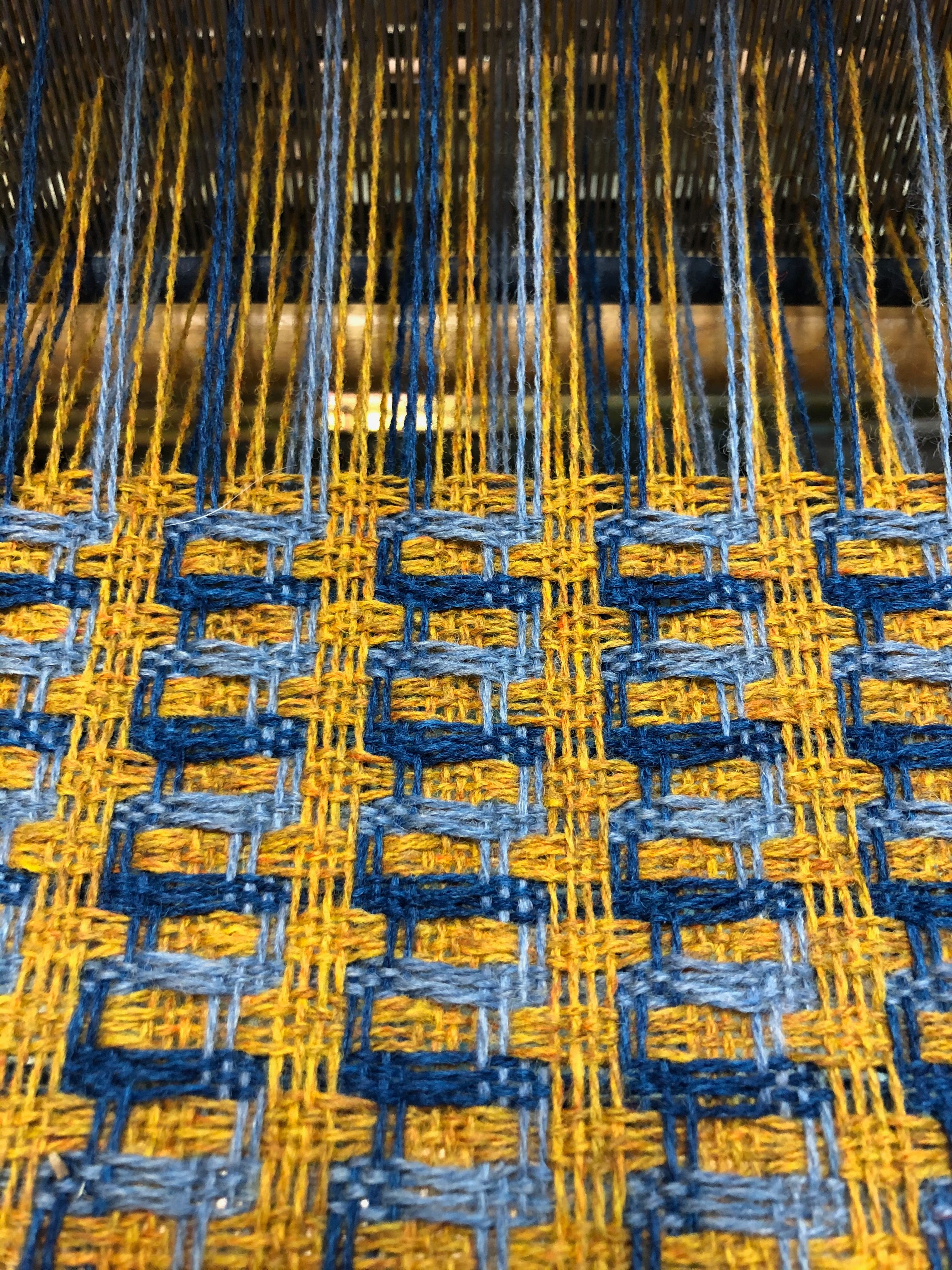
Pieced textiles create texture at seams.
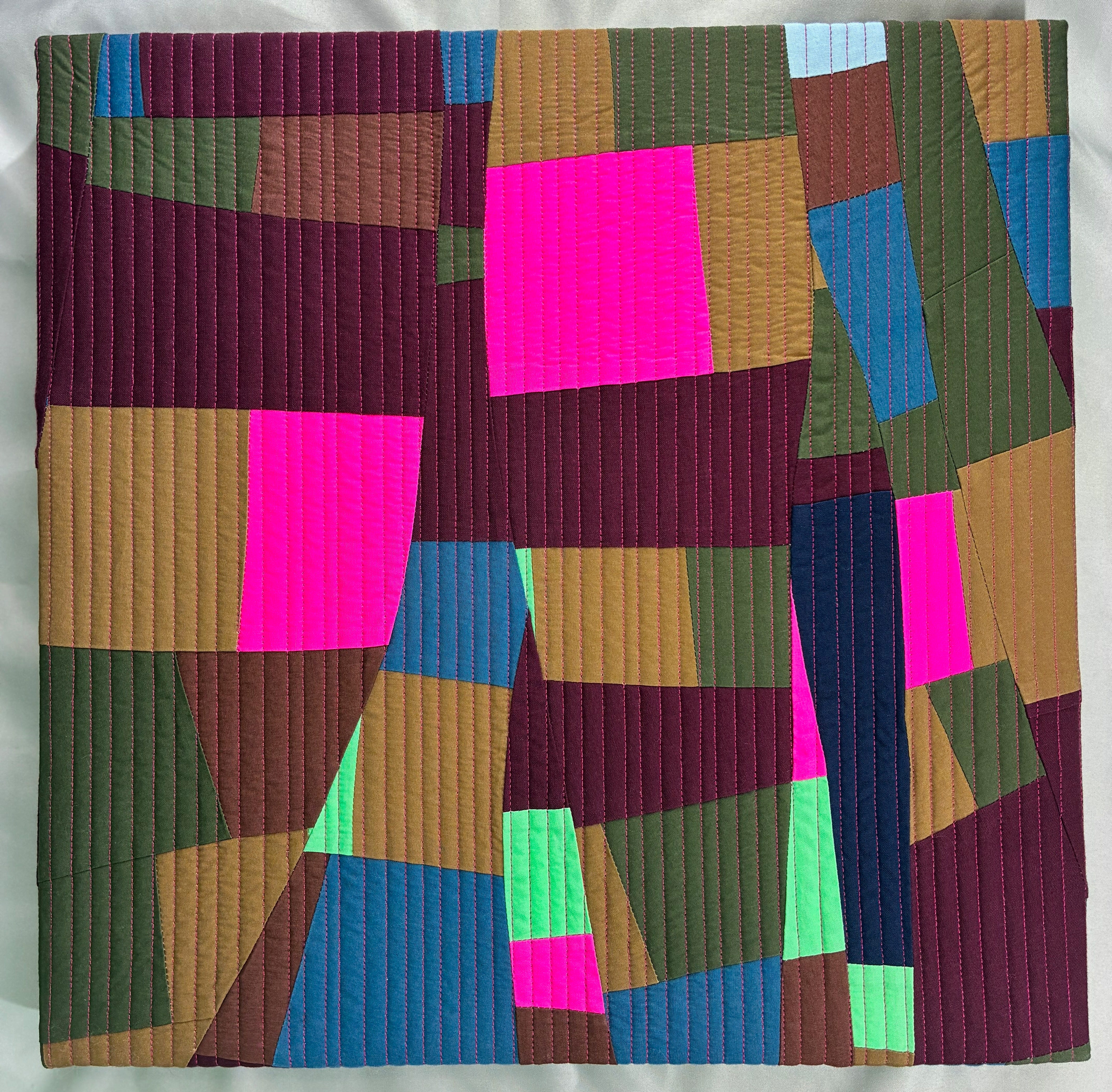
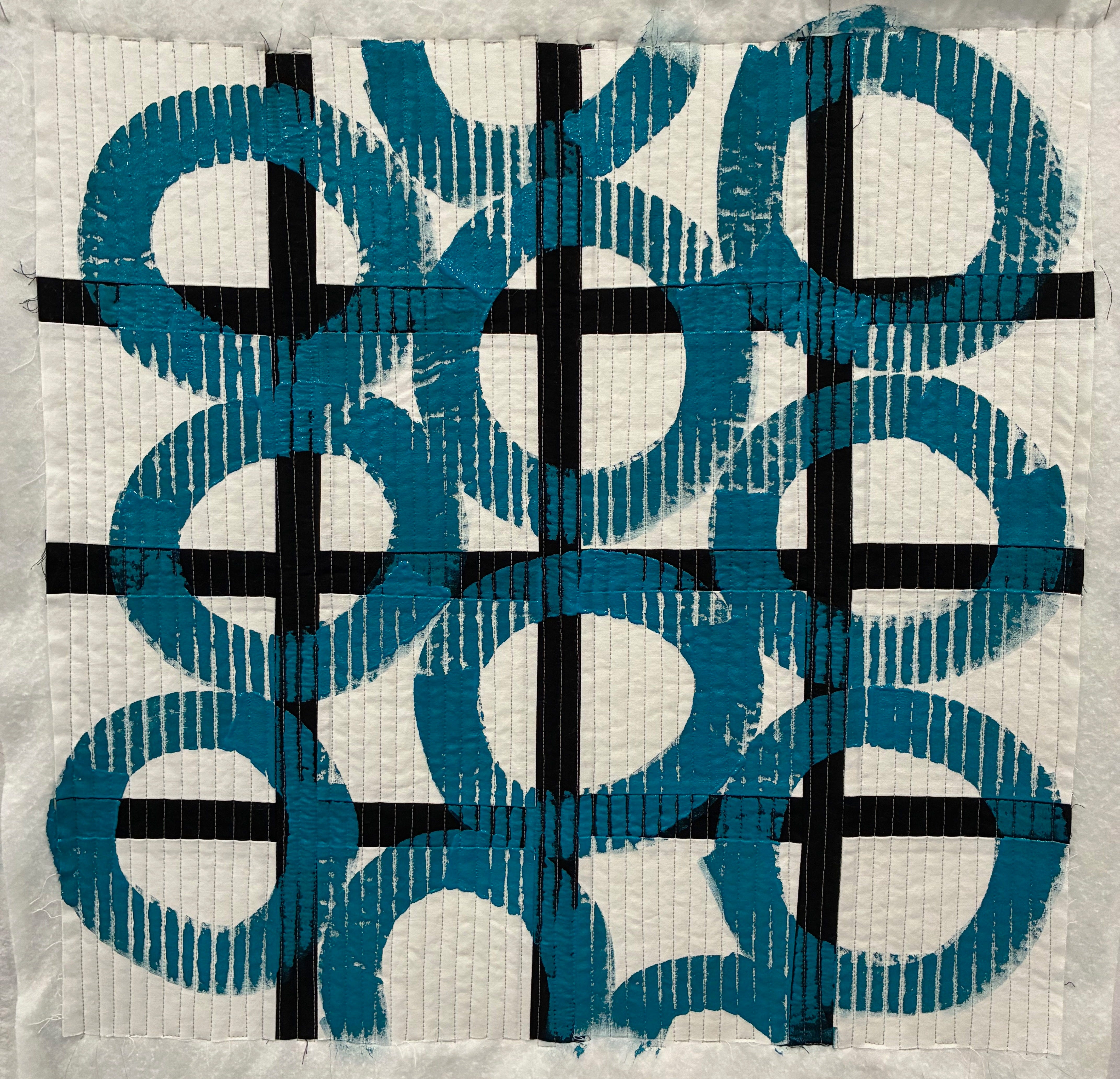
And then, quilts have this added layer of the actual quilting. The stitching together of all the layers creates an indent where the line is. Check out this painted piece below. You can see the texture where the paint has lines in it – those are the quilting lines! It’s freaking cool how it shows up here.
You can also change the quilting texture based on what batting you use (that’s the layer in the middle). Or the type of quilting. Look at how different these two examples are. The one on the left has a loftier batting and is not quilted as dense. The one on the right is a very thin batting and quilted densely. They look so different! The options here are pretty unlimited.


Thread choice also plays a part here. Fine thread will recede into the fabric more than a thicker thread. The color will blend or pop and some threads have a bit of shine. All these choices are crucial to the final composition.
And finally, this is the part that is really intriguing to me: intrinsic texture. At the opening weekend of CraftForms, the artists were invited to give an artist talk and I spoke about how quilts are fine art and I aim for my work to look, in a way, like it is painted. I sew all the pieces together with the goal that they do not look like traditional patchwork but instead the viewer is challenged to see the figures and not the seams. And yes, I said quilts are fine art but that is a discussion for another day.
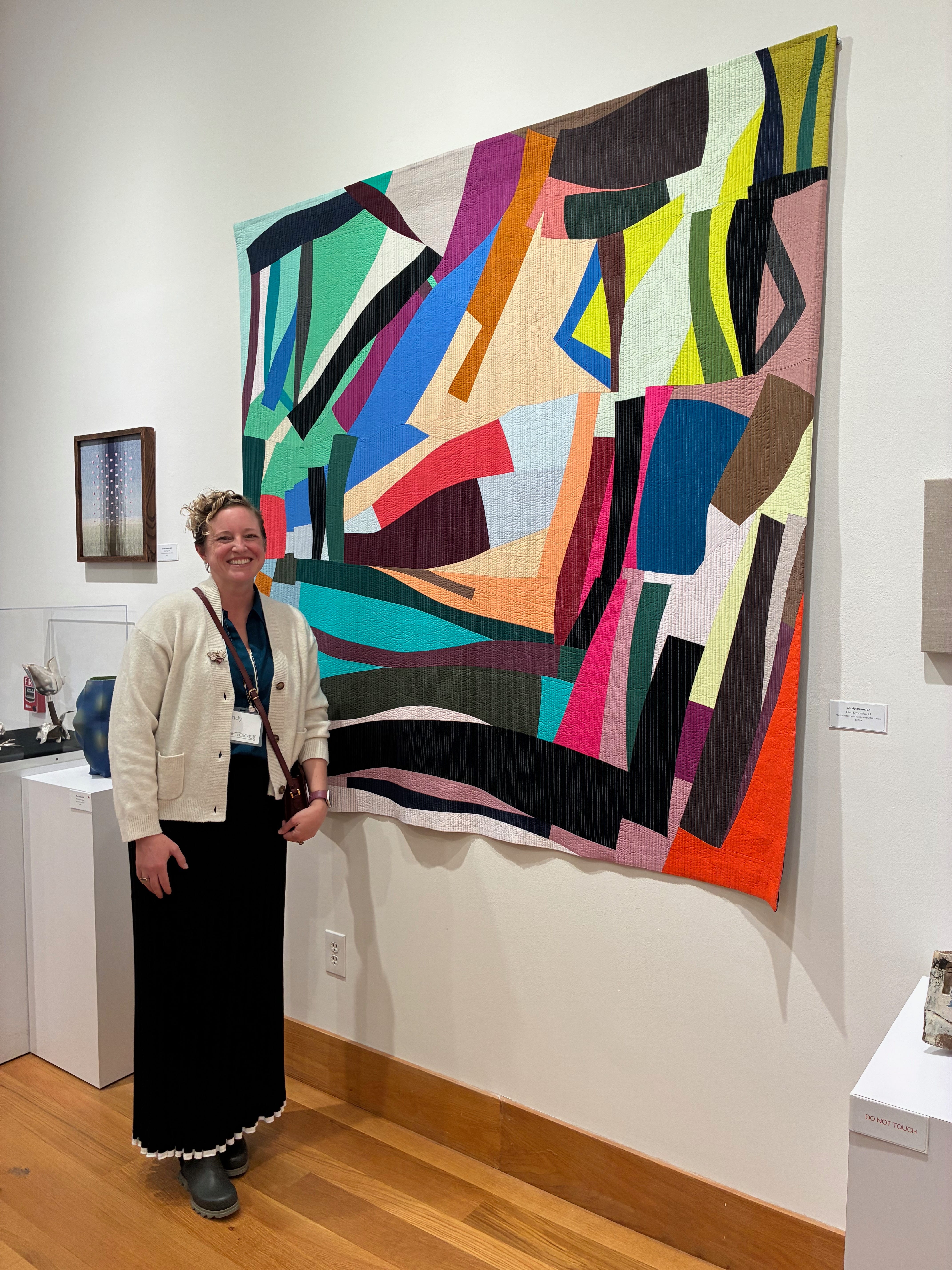
At this point, the juror, Bruce W. Pepich, made a comment about quilts drawing you in because they are not reflective like a painting or photography.
I’ve been thinking a lot about his comment because there was something more there. They also draw you in because while some quilts are fine art, their history is that of comfort and warmth. We associate them with a warm embrace. So, we want to walk up to them, get close, and try to restrain ourselves from touching them. This is their intrinsic texture.
I think I can say with authority that we’ve all been wrapped in a blanket at some point in our lives. Tapestries provided warmth before central heating. Quilted fabrics are used in clothing and jackets for added warmth. We associate textiles with a texture that we have experience with. We know what they feel like. We want to feel their texture.