
Problem Solving
From science to the law to fabric.

One of the reasons I work with fabric and focus on textile art is because I have to figure out how to sew it all together. This is something unique to textile work and adds an additional layer of problem solving to art.
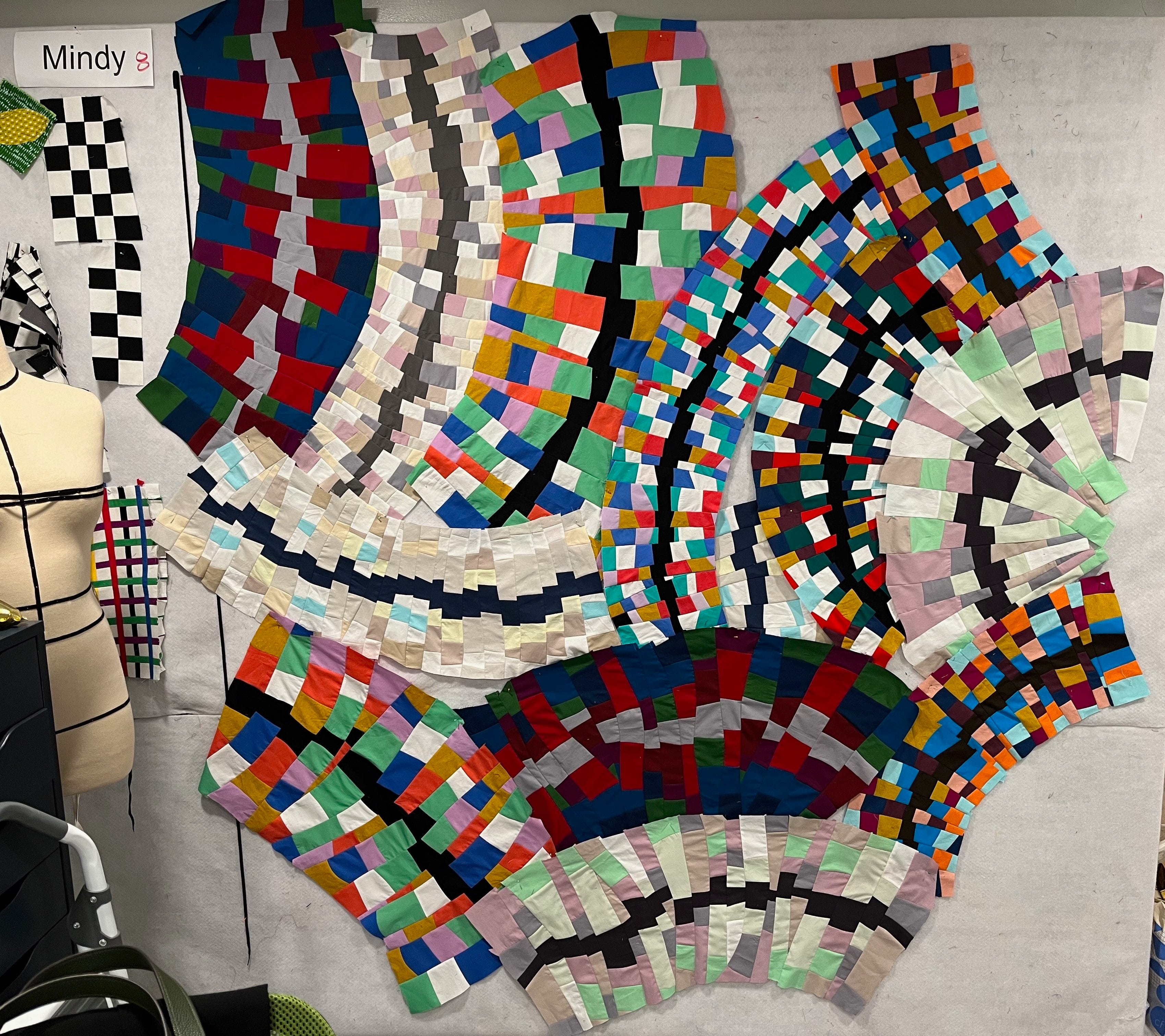
It wasn’t until I started creating my own art and puzzling out how to sew a construction that I realized I’m a problem solver. It’s my super power.
That old saying “you can’t see the forest for the trees” doesn’t apply to me. I see the forest because of the trees. I’m capable of taking in a lot of information and making sense of it. I know this may sound like a weird thing to boast about, but it’s true.
I’m not sure if that is something I’ve always been able to do or if my careers have honed the ability.
Before focusing on being an artist, I was a lawyer. Before that, I was a scientist. I studied antibiotic resistance in subsurface bacteria and received a doctorate from the Florida State University College of Medicine. Science requires a lot or problem solving and coalescing information from disparate sources. Problem solving can feel exponential as a scientist. A lot of it is solved with duct tape but the rest often takes creative thinking and reverse engineering.


Antibiotic resistance comes in many forms. Bacteria most frequently acquire it through gene transfer from other bacteria. These transferred genes can provide resistance through a host of mechanisms such as pumping the antibiotic out of the cell, inactivating the antibiotic, or decreasing intake, to name a few.
The bacteria I studied were resistant to tetracycline and, here is the kicker, isolated from the surface for 3 million years. Yes, 3 million. My advisor and I reasoned that they likely had no surface or human influence and would therefore have novel antibiotic resistance mechanisms. https://pubmed.ncbi.nlm.nih.gov/18677528/
So now I had to figure out how to determine this. Wanna geek out with me for a minute? Cool. This is 2005, and I haven’t been a scientist for a minute, but the solution was elegantly simple at the time. Scientists use vectors all the time for research. Vectors are short circular pieces of DNA that you can insert other pieces of DNA into to express whatever is in that inserted piece. The great thing is we know the exact DNA sequence of the vector and it has spots on it that you open (cut) with enzymes, then you put your piece of DNA in that spot. Cool, right? I knew the bacteria were resistant to tetracycline and it was likely conferred by a gene. So, I chopped up the DNA in random places and inserted all those pieces into vectors, inserted the vector into cells, then grew the cells on plates with tetracycline. If they grew, the tetracycline resistance gene was in the vector and I could sequence it. Once sequenced I compared it to other known tetracycline resistance genes.


I discovered and characterized Tet 42. If you want to geek out even more you can read about it here.
Knowing all these neat things about how tetracycline resistance works, how to cut DNA, how to insert it into vectors, how to grow bacteria on plates, came together to create a very useful method of detecting novel antibiotic resistance genes. It is so useful that it was included in a microbiology methods book. In case you’re wondering these books are not top 10 bestsellers and I have yet to receive any royalties from it.
I’m sure you’re now wondering how I got to the lawyering part. Well, during grad school, I had the opportunity to work in the tech transfer office at the University and I loved it. I got to meet with scientists and learn about what they were researching and help them determine if there was something worth patenting. I found I could talk to the lawyers and the scientists and understand them both. After I graduated, I was off to law school.
I quickly learned in law school that the law is another form of problem solving but with less duct tape. My focus was on intellectual property (IP) law so I could still use all the science I previously learned.
IP law, specifically patent law, is about convincing the patent office that the invention is different enough from everything else that is already patented to be patent eligible. This requires understanding all the prior work in the same field of research and knowing case law. Arguments can be quite creative and can rely on reasoning that is not in the same research area.
Fast forward to 2022. I’ve signed up for my first class to design my own quilt. The instructor shows us that you can use one piece of fabric to create a template for the piece next to it and then sew them together. Once I had that piece of information, I then saw the quilt as a puzzle and (mostly) knew how to sew it all together. I still take classes to learn new techniques but that initial technique was all I needed to open up composition design to me.
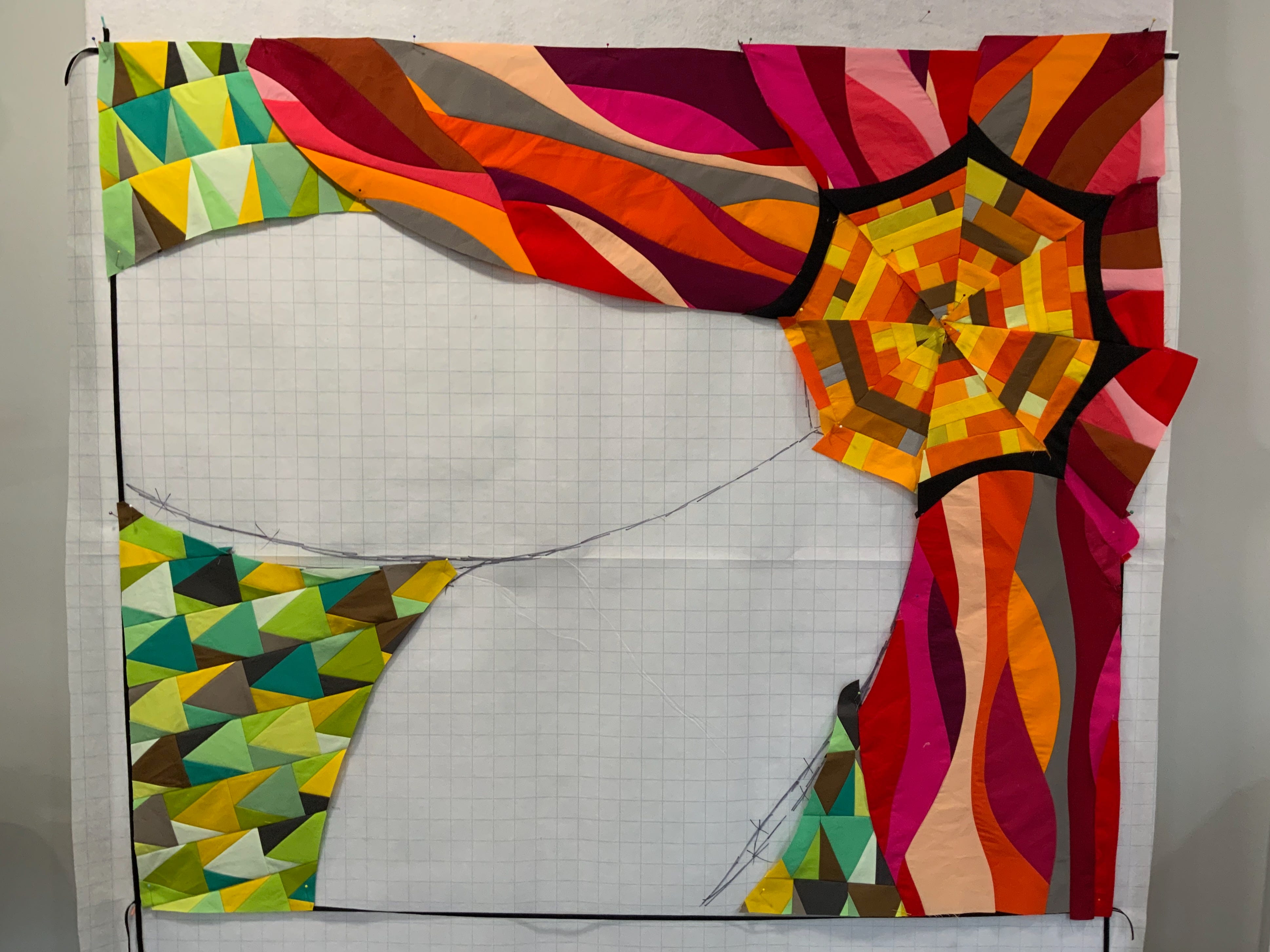
And let me tell you, I LOVE the puzzling together and construction slog, I mean step, of working with fabric. It is so different from other mediums. Not only do you have make sure the composition works but then you have to figure out how to sew it all together.


What if something goes wrong? Fabric is a whole other ball game from other mediums.
You don’t like a color in your painting: paint over it.
You don’t like a color on your collage: remove that piece.
You don’t like the position of a figure in a collage: move it.
You don’t like a color on a sewn composition: get out your seam ripper! You’ll have to take it apart and cut a new piece that fits exactly. Repeat until you find the correct color.
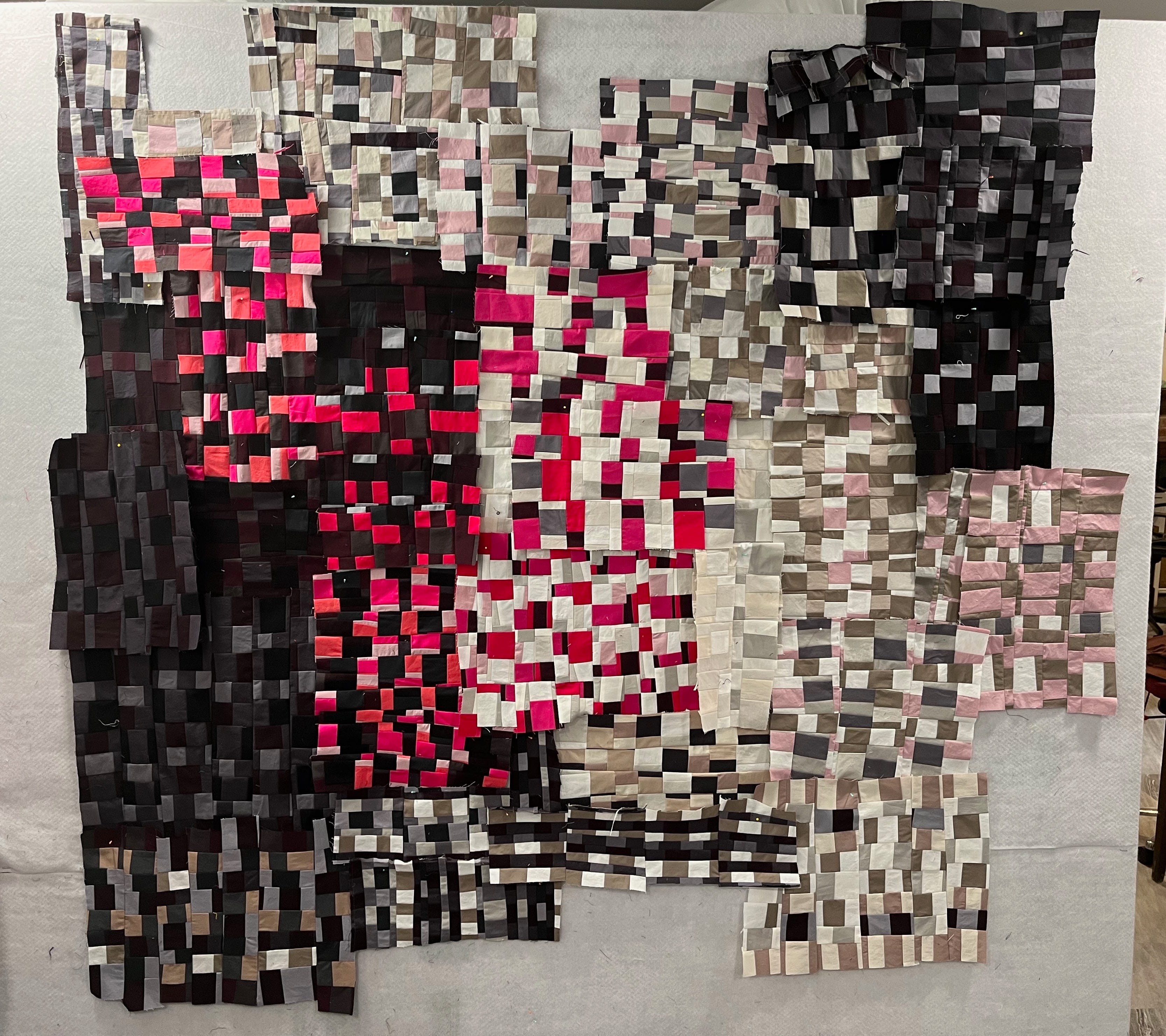
This may seem a little dramatic, and maybe it is, because there is a lot of work that goes into the composition before you sew it potentially resolving any composition issues. However, there are some things you can’t really tell until it is sewn up. Until everything is one piece of fabric, you can’t really know if it will truly work. But that is also one of the aspects that I love. When it works, the dopamine hit is so good!

